
Views: 0 Author: Site Editor Publish Time: 2025-09-04 Origin: Site


You can put in a water purifier for sink with some tools and patience. You do not need to have done a diy installation before. Many homeowners want cleaner and better-tasting water from the tap. The Filterpur Water Purifier For Sink makes this simple. It uses a three-stage filtration system. It also has high capacity choices, like 600 and 1000 gallons. Most people pick a water filtration system because:
Clean water helps your health, energy, and focus.
Tap water can smell or taste bad sometimes.
A filter lowers plastic waste and saves money over time.
Filtered water keeps plumbing and appliances safe.
Did you know 77% of Americans now use a water filter at home? Just follow each step carefully for safe and good results.
Installing a water purifier for your sink helps your family stay healthy. It removes bad things like chlorine and lead from your water.
Using a home water filter saves you money over time. You could save almost $3,500 in five years. This is better than buying bottled water.
A water purifier also cuts down on plastic waste. It helps the environment by stopping thousands of bottles from going to landfills each year.
The installation process is simple. Most homeowners can do it with basic tools and some patience.
You need to take care of your purifier. Change the filter every three months. This keeps your water clean and safe to drink.
The Filterpur Water Purifier For Sink is a smart pick for your kitchen. It gives you clean and safe water from your tap. This system uses three steps to filter water. You can choose a big size, like 600 or 1000 gallons. Here are reasons why this upgrade is good for your home.
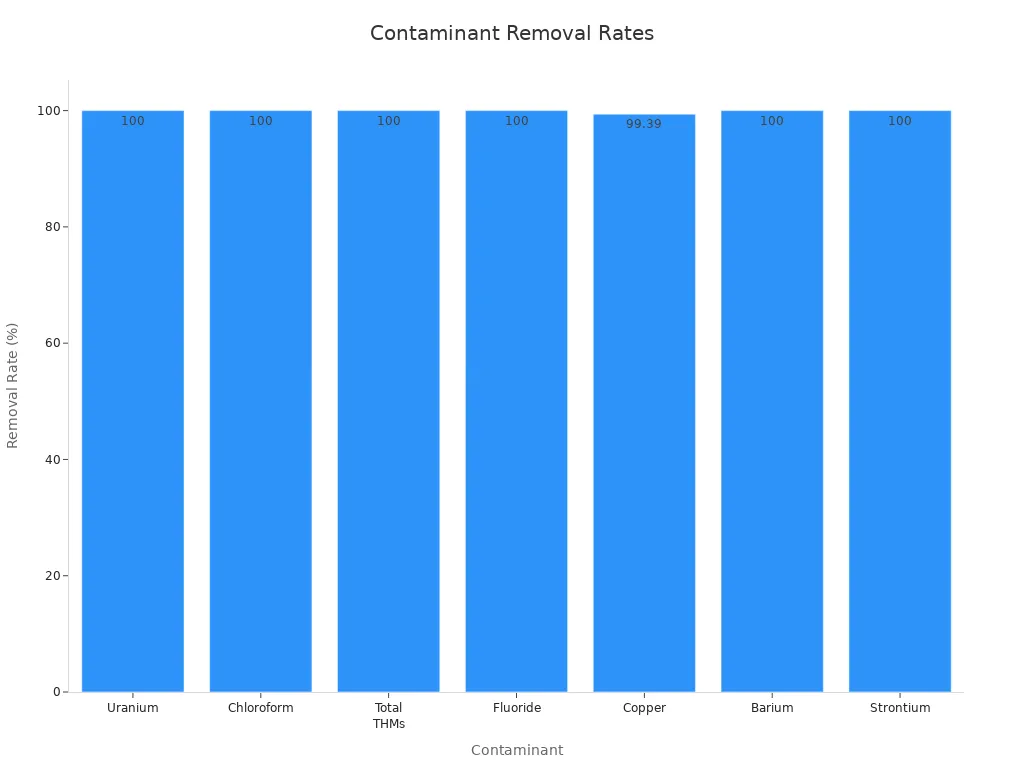
You want water that tastes good and helps your family stay healthy. The Filterpur Water Purifier For Sink takes out sediment, chlorine, and many bad things. Studies show under sink filters can remove all of some dangerous stuff like uranium, chloroform, and fluoride.
Contaminant | Removal Rate |
|---|---|
Uranium | 100% |
Chloroform | 100% |
Total THMs | 100% |
Fluoride | 100% |
Copper | 99.39% |
Barium | 100% |
Strontium | 100% |
Nitrate | Partial |
Sulfate | Partial |
You can see these systems work well to keep you safe. Many filters, like the Filterpur model, also help take out PFAS and other chemicals in tap water. Most experts say you should get minerals from food, so you do not need to worry about losing them in filtered water.
Getting a water purifier for sink saves you money and time. Bottled water costs a lot each year, between $360 and $600. A home filter like Filterpur only needs $50 to $200 for care. In five years, you could save almost $3,500.
Factor | Bottled Water | Home Filtration |
|---|---|---|
Annual Cost | $360–$600 | $50–$200 (maintenance) |
5-Year Total Cost | $5,635 | $2,140 (Reverse Osmosis) |
Net Savings | – | $3,495 |
You also get fresh water whenever you want. No more carrying heavy bottles or rushing to the store. The Filterpur Water Purifier For Sink fits under your sink and works quietly, so you hardly notice it.
A water purifier for sink helps you care for the planet. If you stop buying bottled water, you can keep 1,000 to 2,000 plastic bottles out of landfills every year. For a family of four, that means about 1,000 bottles saved.
Using a water purifier for sink water can lower greenhouse gas emissions by about 79% compared to bottled water.
You help the environment and save money. You get cleaner water, less trash, and more ease. There are many reasons to love it.
Before you start, gather all the tools and supplies. Having everything ready makes the job much easier. Here’s a handy checklist for your installation:
Adjustable wrench
Phillips and flathead screwdrivers
Power drill (if you need to install a new faucet)
Teflon tape (also called plumber’s tape)
Bucket or towel (to catch any water drips)
Under sink water filter system and filter cartridges
Scissors or cutters for plastic tubing
Pencil or marker for marking spots
Sandpaper (optional, for smoothing edges)
Tip: Lay out your tools and parts before you begin. This helps you avoid searching for things in the middle of the project.
You also want to check your faucet type. Most standard faucets work with the Filterpur Water Purifier For Sink. If you have a pull-out or handheld faucet, you may need a different setup. The Filterpur system comes with three adapters, so you can match your faucet threading easily.
Picking the best under sink water filter for your home means thinking about a few key things. Here’s a quick table to help you compare:
Factor | Description |
|---|---|
Contaminant Reduction | Pick a filter that removes the main contaminants in your water, like lead or chlorine. |
Size and Space | Make sure the filter fits under your sink and meets your water needs. |
Cost and Value | Look for a filter that gives you good value and lasts a long time. |
Filter Lifespan | Check how long the filter lasts and how often you need to change it. |
Installation Requirements | Choose a filter that is easy to install and does not need special tools. |
The Filterpur Water Purifier For Sink comes in 600 and 1000-gallon models. Both options give you long-lasting clean water. You can pick the size that fits your family’s needs. Most people find the installation process simple, especially with standard faucets.
Before you start, take a good look under your sink. You want to find a spot where the Filterpur Water Purifier For Sink will fit without getting in the way of other pipes or cleaning supplies. Most people put the filter close to the cold water line and near the back wall. This keeps it out of your way but still easy to reach when you need to change the filter.
Take a moment to read the instructions that come with your Filterpur system. Every model has its own steps and tips. The manual will show you the best way to set up your filter and what tools you need. If you have never installed a water filter before, the guide will help you feel more confident.
Tip: Snap a quick photo of the area under your sink before you start. This helps you remember where everything goes if you need to move things around.
Some places have rules about plumbing work. You might need to check if your city or building requires a licensed plumber for installation. If you rent your home, ask your landlord before you begin. Most homeowners can install the Filterpur Water Purifier For Sink themselves, but it’s always smart to double-check.
You need to turn off the water before you start working. This keeps you dry and helps prevent leaks. Here’s how you do it:
Find the cold water shutoff valve under your sink. Turn it clockwise until it stops.
Open the cold water faucet at your sink. This lets out any water left in the pipes and relieves pressure.
Use an adjustable wrench to loosen the nut on the tubing connected to the cold water supply line. Gently disconnect the tubing.
Now you’re ready to move on to the next step. Taking these actions keeps your workspace safe and dry. If you follow these steps, you’ll have a smooth start to your installation.

Ready to get your Filterpur under-sink water filtration system up and running? Let’s walk through each step together. You’ll see how easy it is to install a sink water filter in your kitchen. Just follow these installation steps, and you’ll soon enjoy fresh, filtered water right from your filtered water faucet.
Start by getting your water filtration device ready. Take the filter cartridges out of the box. Soak the main filter in cold water for about 15 minutes. This helps remove air and gets the filter ready for use. After soaking, hold the filter under cold running water for 10 seconds to drain any extra water. If your system has a removable filter cover, wash it with mild soap and rinse well. Attach the cover by twisting it until it locks in place. Push the filter into the tray and twist it to lock.
Tip: Always wash your hands before touching the filters. This keeps your sink water filtration systems clean and safe.
Now, let’s connect your under-sink water filtration system to the cold water line. Pick a spot under your kitchen sink where the filter housing will fit. Mark the pilot holes for the bracket. Turn off the cold water supply if you haven’t already. Disconnect the cold water line from the shutoff valve. Attach the adapter valve that comes with your Filterpur system. Cut the tubing to the right length and connect it to the inlet valve on the filter housing. Make sure each connection is tight to prevent leaks.
Note: Always use the right size adapter for your water filter installation. A wrong-sized adapter can cause leaks that are hard to fix.
You need a separate filtered water faucet for your sink water filter. Choose a spot on your kitchen sink or countertop. Drill a hole carefully, especially if you have granite or quartz. Place the faucet in the hole and secure it with the provided hardware. Connect the tubing from the under-sink water filtration system to the base of the filtered water faucet. Tighten all fittings by hand, then use a wrench for a snug fit.
Safety Tip: Turn on the cold water supply slowly after installing the faucet. Watch for leaks around the fittings.
Pick a spot on the cabinet wall under your kitchen sink. Make sure you can reach the filter for future changes. Check that there’s enough space for the filter and tubing. Drill small starter holes for the screws. Hold the mounting bracket in place and insert the screws. Tighten them so the bracket is firm. Hang the filter housing on the bracket. Your under-sink water filtration system should not move or wobble.
Pro Tip: Leave a little space below the filter. This makes it easier to remove the filter cartridge during maintenance.
Now, connect all the tubing for your sink water filter. Attach the inlet tube from the cold water adapter to the filter’s inlet port. Connect the outlet tube from the filter to the filtered water faucet. Use Teflon tape on threaded fittings to make a watertight seal. Push the tubing into the quick-connect fittings until you feel it click. Tug gently to check that each connection is secure.
Common Mistake: Loose connections are the top cause of leaks in under-sink water filtration systems. Always double-check each water filter attachment.
You’re almost done! Slowly turn on the cold water supply. Watch each connection closely. If you see a drip, tighten the fitting or add more plumber’s tape. Let the water run for a few minutes to flush the system. This clears out any air and loose particles from your new sink water filter. Check all seals and gaskets for signs of wear. If you spot a leak, fix it right away.
Regularly check your under-sink water filtration system for leaks, especially after storing cleaning supplies under the kitchen sink. Bumping into the system can loosen connections over time.
Here’s a quick table of common mistakes to avoid during filter installation:
Mistake | How to Avoid It |
|---|---|
Improper placement | Plan your installation location first |
Ignoring water pressure needs | Check your kitchen’s water pressure |
Using non-certified products | Use only Filterpur parts and filters |
Not flushing the system | Always flush after installation |
Skipping maintenance | Set reminders for filter changes |
You did it! Your under-sink water filtration system is now ready to deliver clean, filtered water right to your kitchen. Enjoy the peace of mind that comes with every glass.
Leaks can happen, but you can fix them quickly with a few simple steps. Start by checking all the connections under your sink. Sometimes, a loose fitting or a missing seal causes water to drip. Here’s what you can do:
Reapply Teflon tape to any threaded connections. This helps seal small gaps.
Add pipe dope to stubborn leaks for extra protection.
Clean the groove where the O-ring sits. Lubricate the O-ring with food-grade silicone grease before putting it back.
Make sure the filter sits evenly and tighten it as the instructions say. Do not overtighten, or you might damage the seals.
Check the O-rings for wear every time you change the filter. Replace them if they look old or cracked.
Tip: Always keep a towel or bucket handy when checking for leaks. This makes cleanup easy.
If you still see leaks after these steps, reach out to Filterpur support for help. Their team can guide you through more advanced fixes.
Low water pressure can make filling a glass take forever. You can solve this by checking a few common issues:
A clogged filter slows down water flow. Replace the filter if it’s old or dirty.
High levels of dissolved solids in your water can make the filter work harder.
Look for kinks or bends in the tubing. Straighten them out to improve flow.
Check your home’s water pressure. Sometimes, the problem starts before the water reaches your filter.
The faucet’s aerator might be blocked. Unscrew it and rinse away any debris.
Valves inside the filter system can get clogged or stuck. Make sure they move freely.
If you fix these things and still have low pressure, contact Filterpur support for more help.
Sometimes, water stops flowing or comes out in a trickle. Here’s what you should check:
Replace the filter after 100 gallons or every three months, whichever comes first.
Look at the Filter Change Light. If it flashes red, it’s time for a new filter.
Make sure the filter is twisted in tightly. A loose filter can let unfiltered water leak out or block the flow.
Note: Regular filter changes keep your water fresh and your system running smoothly.
If you follow these steps, you can fix most problems yourself. For anything you can’t solve, Filterpur’s customer support is always ready to help.
You just finished installing your Filterpur Water Purifier for Sink. Now, you need to flush the system before you drink from your new filtered water supply. Flushing helps remove any dust or loose particles from the filter. Here’s how you do it:
Reconnect the filtration system to your water supply.
Check the inlet valve for leaks.
Run water through the filter to a drain for at least five minutes.
If your filter has more than one outlet port, run water through each port for five minutes.
For reverse osmosis systems, empty the storage tank until the pump turns on, then flush for ten minutes.
Tip: Flushing the system right away gives you the best start for improved water quality.
You want to make sure your filtered water supply stays clean and safe. There are a few easy ways to check your water after installation.
Method | Description |
|---|---|
Water Testing | Test your water a month or two after installation to check the purifier’s work. |
Written Guarantee | Ask for documentation that your device solves your water quality concerns. |
Check for leaks and odd sounds every month.
Watch for changes in water flow rate.
Taste your water often to spot any changes.
Note: If you notice a drop in flow or a strange taste, it might be time to check your filter.
Keeping your Filterpur system in top shape is simple. Replace the filter after 100 gallons of use or every three months. If you see the Filter Change Light flash red, swap in a new filter right away. Regular filter changes help your filtered water supply stay fresh and healthy.
Mark your calendar for filter changes.
Always use genuine Filterpur filters for the best results.
Wipe down the outside of the system when you clean under the sink.
A little care goes a long way. You get peace of mind and great-tasting water every day.
You now know how to put in a water purifier for your sink. The steps are easy to follow. You can do this job by yourself. Using Filterpur gives you cleaner water. You will feel safe about your water. Check the system often and change the filter when needed. This helps your water purifier work well. Here are some things you will notice:
Your family will be healthier.
Your water will taste better.
You will spend less on bottled water.
Your appliances will last longer.
There will be less plastic trash around you.
You can make your water better and see the change every day!
You should change your Filterpur filter every three months or after 100 gallons of use. If you notice a drop in water flow or taste, swap it out sooner.
Yes, you can! The Filterpur system comes with clear instructions. Most people finish the job in under an hour. You only need basic tools and a little patience.
Run water through the filter for five minutes to flush out any dust or loose particles. If the taste does not improve, check that the filter is installed correctly.
Yes, it does. The three-stage filtration system removes lead, chlorine, and many other common contaminants. You get cleaner, safer water right from your tap.


